1. Introduction and History
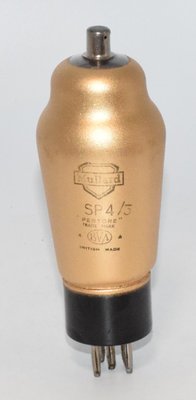
The SP4/5 is a British vacuum tube (valve) manufactured primarily by Mullard, one of the most respected valve manufacturers of the 20th century. This medium-mu pentode was developed during the mid-20th century as part of the SP series of output and driver pentodes. The SP designation indicates a "Screened Pentode" design, which became a standard classification for pentode tubes in British and European vacuum tube nomenclature.
The tube emerged during an era when valve technology was at its peak, serving both commercial broadcasting and consumer audio equipment applications. Mullard's SP4/5 represents the refinement of pentode design principles that had been developed over decades of vacuum tube engineering. The "4/5" designation likely refers to its classification within Mullard's product hierarchy, indicating specific performance characteristics and operating parameters.
During the post-World War II period through the 1960s, the SP4/5 found widespread use in British audio equipment, radio receivers, and amplification systems. Its reputation for reliability and consistent performance made it a preferred choice for manufacturers seeking quality output and driver stage tubes. Today, original Mullard NOS (New Old Stock) examples are highly sought after by audio enthusiasts and vintage equipment restorers.
2. Technical Specifications and Design
Physical Characteristics
The SP4/5 is a noval-based pentode tube featuring a 9-pin configuration. The tube measures approximately 3.5 inches (89mm) in height and has a glass envelope design typical of British pentodes from this era. The construction utilizes a robust internal structure with carefully designed electrode spacing to minimize distortion and maximize stability.
Electrical Specifications
| Parameter | Typical Value |
|---|---|
| Heater Voltage | 6.3V AC |
| Heater Current | 0.9A |
| Plate Voltage (Maximum) | 330V |
| Screen Voltage (Typical) | 250V |
| Grid 2 (Screen) Current | ~15mA |
| Maximum Plate Dissipation | 12W |
| Amplification Factor (μ) | ~35-45 |
| Transconductance (gm) | ~8-10 mS |
| Plate Resistance (rp) | ~4-5 kΩ |
Internal Design Features
The SP4/5 employs a screened pentode configuration with five electrodes: cathode, control grid, screen grid (Grid 2), suppressor grid (Grid 3), and plate. This five-electrode design provides superior control over electron flow and significantly reduces secondary emission effects compared to tetrodes.
The control grid is designed with relatively close spacing to the cathode, enabling good gain characteristics and responsive signal handling. The screen grid acts as an electrostatic shield, preventing interaction between the plate and control grid, thereby improving stability and reducing feedback effects. The suppressor grid, typically connected to the cathode, suppresses secondary electrons emitted from the plate, resulting in more linear plate characteristics and lower distortion.
The tube features a directly heated cathode with oxide coating for enhanced electron emission. The plate structure is designed to handle moderate power dissipation while maintaining thermal stability. The internal construction reflects Mullard's commitment to quality, with precisely positioned electrodes and careful attention to mechanical rigidity to minimize microphony.
3. Applications and Usage
Original Commercial Applications
The SP4/5 was originally designed for use as an output pentode in audio amplifiers and as a driver stage tube in radio receivers. Its moderate power handling capability (12W plate dissipation) made it suitable for small to medium-power applications. In British radio receivers of the 1950s-1960s, the SP4/5 commonly served as the final audio output stage, driving speaker systems in domestic wireless receivers.
The tube also found application in professional audio equipment, including mixing consoles, microphone preamplifiers, and broadcast audio systems. Its stable characteristics and relatively low distortion made it a reliable choice for applications requiring consistent performance over extended operating periods.
Modern Audio Community Usage
In contemporary audio circles, the SP4/5 has experienced a renaissance among vintage audio enthusiasts and audio engineers specializing in restoration and preservation of classic equipment. The tube is particularly valued in the following applications:
- Vintage Amplifier Restoration: Enthusiasts restoring classic British amplifiers from the 1950s-1970s often seek original SP4/5 tubes to maintain authenticity and restore original performance characteristics. The tube's availability as NOS stock makes this possible, though supplies are becoming increasingly limited.
- High-End Audio Systems: Some audiophiles incorporate SP4/5 tubes into custom-built amplifiers and audio systems, valuing the tube's tonal characteristics and construction quality. These applications often involve smaller, lower-power amplifier designs emphasizing sonic purity.
- Studio Recording Equipment: Professional audio engineers occasionally use SP4/5 tubes in vintage-inspired microphone preamplifiers and mixing console modifications, seeking the sonic character associated with classic British audio design.
- DIY Amplifier Projects: The audio DIY community has embraced the SP4/5 for small-scale amplifier projects, particularly single-ended triode (SET) amplifier designs and low-power push-pull configurations.
- Vintage Radio Restoration: Radio enthusiasts and collectors actively seek SP4/5 tubes for authentic restoration of classic British radio receivers, where the tube serves as the audio output stage.
4. Sound Characteristics
Tonal Profile
The SP4/5 is renowned among audio enthusiasts for its warm, musical presentation with a smooth midrange character. The tube exhibits a gentle, natural compression in the upper midrange that many listeners find pleasing and non-fatiguing. This characteristic is attributed to the pentode's design and the particular electrode geometry employed by Mullard.
Frequency Response Characteristics
The tube demonstrates a relatively flat frequency response across the audio spectrum when properly biased and loaded. However, the natural rolloff in the extreme high frequencies contributes to a slightly warm presentation. The bass response is tight and well-controlled, with good transient handling. The midrange exhibits exceptional clarity, with vocals and acoustic instruments rendered with natural tonality.
Harmonic Structure
One of the SP4/5's notable characteristics is its harmonic signature. The tube generates primarily second and third-order harmonics, which are generally considered musically pleasant and less fatiguing than higher-order harmonics. This harmonic coloration contributes significantly to the tube's reputation for warmth without excessive softness.
Distortion Characteristics
At moderate operating levels, the SP4/5 exhibits relatively low distortion, typically in the 1-3% range depending on load impedance and operating point. However, when driven harder, the tube produces a smooth, musical distortion character that many audiophiles prefer to solid-state alternatives. The distortion onset is gradual and non-harsh, making the tube forgiving of overdriving.
Dynamic Response
The SP4/5 demonstrates excellent dynamic response with good transient handling. The tube's ability to respond quickly to signal changes contributes to its reputation for clarity and definition. Percussion instruments and plucked strings are rendered with good articulation and natural decay characteristics.
Noise and Microphony
Original Mullard SP4/5 tubes are generally noted for low noise floors and reasonable microphony characteristics. However, like all vintage tubes, individual specimens can vary. Well-preserved NOS examples typically exhibit excellent low-noise performance, contributing to quiet operation in sensitive audio applications.
5. Equivalent or Substitute Types
Direct Equivalents
The most direct equivalent to the SP4/5 is the EL84, though the EL84 is technically a different tube type with slightly different characteristics. However, in many applications, the EL84 can serve as a functional substitute, though the sonic character will differ somewhat.
Other British pentodes from the same era that share similar characteristics include:
- EL86 - A similar medium-mu pentode with comparable power handling
- EL41 - Another British pentode option with similar operating parameters
- 6V6GT - An American equivalent with similar power ratings and characteristics
- 6L6 - A more robust alternative for higher-power applications
Functional Alternatives
When exact SP4/5 tubes are unavailable, audio engineers may substitute:
- EL84 - Most common substitute, though requires circuit modification in some applications
- 6V6GT - American equivalent with similar characteristics
- EL41 - Another British option from the same era
Important Note: Any tube substitution should be carefully verified against the original equipment's specifications. Plate voltage, screen voltage, and load impedance requirements must be compatible. Improper substitution can result in reduced performance, excessive distortion, or potential damage to equipment.
6. Notable Characteristics
Build Quality and Reliability
Mullard's SP4/5 exemplifies the high manufacturing standards of British valve production. The tube features robust internal construction with carefully engineered electrode spacing. The glass envelope is of high quality, and the base assembly is solidly constructed. This build quality contributes to the tube's longevity and reliability, with many original examples still functioning perfectly after 60+ years.
Consistency and Matching
Original Mullard SP4/5 tubes are noted for good consistency between individual specimens. This consistency made them popular for push-pull amplifier applications where matched pairs are desirable. However, variation does exist, and careful selection or testing may be necessary for critical applications.
Rarity and Collectibility
As original manufacturing ceased decades ago, genuine NOS (New Old Stock) Mullard SP4/5 tubes have become increasingly rare and collectible. Prices for authentic examples have risen substantially, reflecting both their scarcity and the strong demand from audio enthusiasts. Counterfeit or re-branded tubes do exist in the marketplace, making authentication important for serious collectors.
Longevity and Aging
Well-preserved SP4/5 tubes demonstrate excellent longevity. Many examples continue to function at or near original specifications even after 60+ years of storage. However, like all vacuum tubes, performance gradually degrades with age and use. Stored tubes typically age more slowly than tubes in active service.
Environmental Sensitivity
The SP4/5, like all vacuum tubes, is sensitive to physical shock and vibration. The tube should be handled carefully and installed in equipment with proper mechanical isolation to minimize microphony. Storage in cool, dry conditions helps preserve tube longevity.
Conclusion
The SP4/5 represents a significant achievement in British vacuum tube engineering, combining reliable performance with warm, musical sonic characteristics. Whether in original vintage equipment or modern audio applications, the tube continues to be valued for its tonal qualities and robust construction. As supplies of original NOS examples diminish, the SP4/5 remains a sought-after component for audio enthusiasts committed to preserving and enjoying classic audio equipment.
For those fortunate enough to acquire genuine Mullard SP4/5 tubes, proper handling, storage, and application in well-designed circuits will ensure years of reliable, musically satisfying performance. The tube stands as a testament to an era when audio component design prioritized sonic quality and long-term reliability.