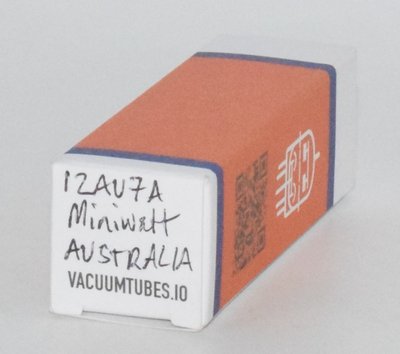
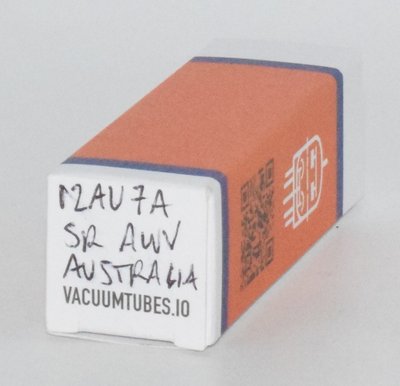
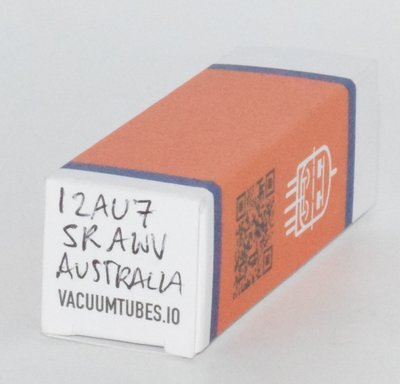
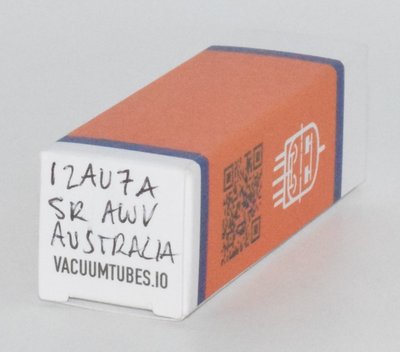
1. Introduction and History
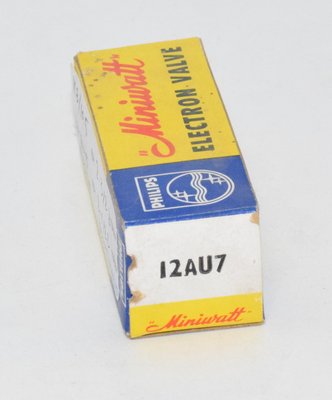
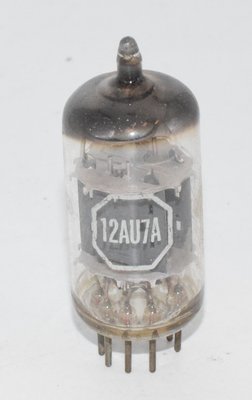
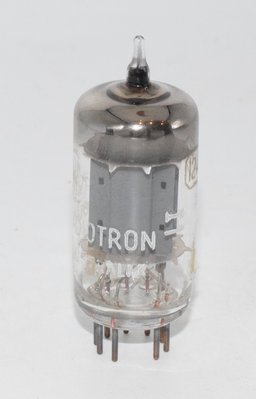
\n\nThe 12AU7, also known by its European designation ECC82, is a twin triode vacuum tube that was first introduced in the late 1940s. It belongs to the 9-pin miniature family of tubes that emerged after World War II as manufacturers sought smaller, more reliable vacuum tubes. Developed primarily as an audio frequency amplifier and phase inverter, the 12AU7 quickly became a staple in both professional audio equipment and consumer electronics.
\n\nThe tube's designation follows standard naming conventions: '12' refers to the heater voltage (12.6V when used in series, or 6.3V with parallel heater connections), 'AU' is the tube family identifier, and '7' is the specific model number within that family. The European designation ECC82 follows a different logic, with 'E' indicating a 6.3V heater, 'CC' designating a twin triode, and '82' as the specific type number.
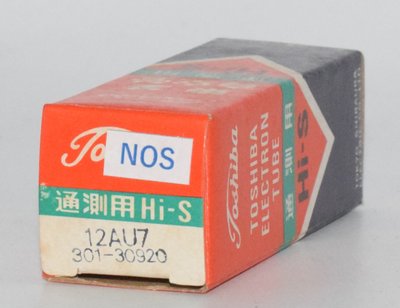
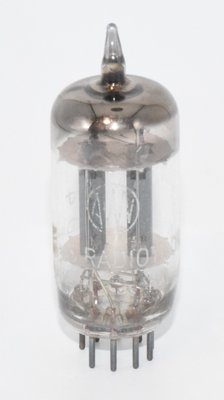
\n\nJapanese manufacturers like Matsushita (now Panasonic) and Toshiba began producing the 12AU7/ECC82 in the 1950s and 1960s as Japan's electronics industry expanded. Japanese tubes from this era are particularly noted for their build quality and consistency, making them sought after by audio enthusiasts and tube amplifier builders.
\n\n2. Technical Specifications and Design
\n\nPhysical Characteristics:
\n- \n
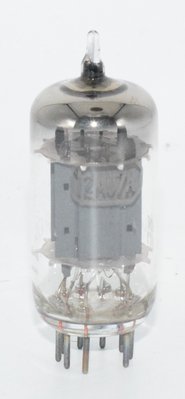
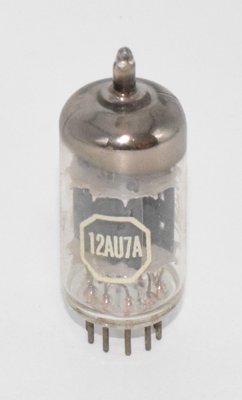
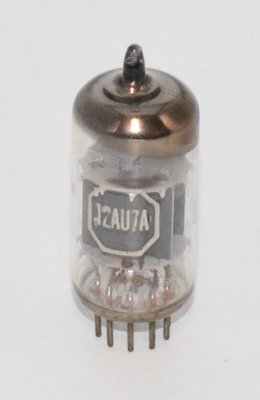
- Envelope: Glass, 9-pin miniature (B9A base) \n
- Height: Approximately 1.75 inches (44.5mm) \n
- Diameter: Approximately 0.75 inches (19mm) \n
- Pin Configuration: Noval (9-pin) \n
- Internal Structure: Twin triode (two identical triode sections in one envelope) \n
Electrical Parameters:
\n- \n
- Heater Voltage: 12.6V (series) or 6.3V (parallel) \n
- Heater Current: 150mA (12.6V) or 300mA (6.3V) \n
- Plate Voltage (maximum): 330V \n
- Plate Dissipation: 2.75W per section \n
- Transconductance: Approximately 2,200 μmhos (2.2 mA/V) \n
- Amplification Factor (μ): 17 \n
- Plate Resistance: Approximately 7,700 ohms \n
- Grid Bias (typical): -8.5V at 250V plate voltage \n
- Maximum Cathode Current: 20mA per section \n
Typical Operating Conditions (per triode):
\n- \n
- Plate Voltage: 250V \n
- Grid Voltage: -8.5V \n
- Plate Current: 10.5mA \n
- Plate Resistance: 7,700 ohms \n
- Transconductance: 2,200 μmhos \n
- Amplification Factor: 17 \n
Design Features:
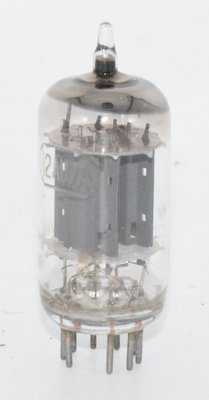
\nThe 12AU7 features a medium-mu (amplification factor) design with robust plate structures, making it suitable for various applications. Its internal construction includes two identical triode sections with separate cathodes, grids, and plates, but sharing a common heater. The Japanese variants from Matsushita and Toshiba typically feature high-quality mica spacers, precise grid winding, and robust plate structures that contribute to their reliability and sonic characteristics.
\n\n3. Applications and Usage
\n\nThe 12AU7/ECC82 has found application in numerous electronic devices due to its versatility and reliable performance:
\n\nAudio Applications:
\n- \n
- Preamplifiers: Commonly used in the input and driver stages of audio preamplifiers \n
- Phase Inverters: Excellent for split-load (cathodyne) and long-tailed pair phase inverter circuits in push-pull amplifiers \n
- Line Stages: Popular in line-level amplification stages \n
- Buffer Stages: Used as cathode followers in buffer applications \n
- Power Amplifiers: Driver stages in power amplifiers \n
- Guitar Amplifiers: Preamp and phase inverter stages in guitar amplifiers \n
Other Applications:
\n- \n
- Oscillators: Used in various oscillator circuits \n
- Mixers: Found in radio frequency mixer applications \n
- Multivibrators: Used in multivibrator circuits for timing and pulse generation \n
- Computers: Used in early computer circuits as switches and logic elements \n
- Test Equipment: Found in various vintage test instruments \n
The Japanese-made 12AU7 tubes are particularly valued in high-fidelity audio applications where their low noise, consistent performance, and balanced tonal characteristics are advantageous. The Matsushita and Toshiba variants are often sought after for their reliability and sonic signature, characterized by a slightly warm midrange with good detail and extension.
\n\n4. Equivalent or Substitute Types
\n\nDirect Equivalents:
\n- \n
- ECC82: European designation, electrically identical \n
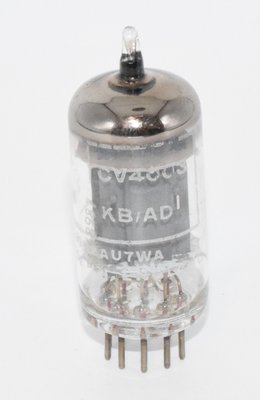
- B329: British military designation \n
- CV491: British military designation \n
- 5814: Military ruggedized version with slightly different specifications \n
- 6189: Premium military version with tighter specifications \n
- E82CC: Premium European version with tighter specifications \n
Partial Substitutes (may require circuit adjustments):
\n- \n
- 12AT7/ECC81: Higher gain (μ=60) but lower current capability \n
- 12AX7/ECC83: Much higher gain (μ=100) but lower current capability \n
- 12AY7: Medium gain (μ=40), can substitute in some applications \n
- 12BH7: Similar gain but higher current capability \n
- 5963: Similar characteristics but designed for computer use \n
- 6CG7/6FQ7: Similar characteristics but with different pinout \n
When substituting tubes, it's important to consider not just the gain factor but also plate resistance, transconductance, and current handling capability. While the above tubes may work as substitutes in many applications, they can significantly alter the circuit's performance and may require bias adjustments or other circuit modifications.
\n\n5. Notable Characteristics
\n\nSonic Characteristics:
\nThe 12AU7 is known for its balanced, neutral sound with good detail and dynamics. Compared to higher-gain tubes like the 12AX7, it tends to have:
\n- \n
- Lower noise floor and microphonics \n
- Better linearity when properly biased \n
- More headroom before distortion \n
- Faster transient response \n
- More extended high-frequency response \n
Japanese Manufacturing Specifics:
\nJapanese 12AU7 tubes from manufacturers like Matsushita and Toshiba are distinguished by:
\n- \n
- High build quality with precise internal alignment \n
- Consistent performance between units \n
- Robust construction that contributes to long service life \n
- Slightly warm tonal character with good detail \n
- Lower microphonics than many contemporary equivalents \n
- Distinctive "halo" getter structure (often located at the top of the tube) \n
- Precise grid winding techniques resulting in stable operation \n
Longevity and Reliability:
\nThe 12AU7 is generally known for its reliability and long service life. When operated within specifications, these tubes can last 5,000 to 10,000 hours or more. Japanese variants from Matsushita and Toshiba are particularly noted for their durability and consistent performance throughout their service life.
\n\nCollector Value:
\nVintage Japanese 12AU7/ECC82 tubes have become collectible items among audio enthusiasts. NOS (New Old Stock) examples from Matsushita or Toshiba can command premium prices in the market due to their reputation for quality and increasingly limited supply. Their sonic characteristics and reliability make them particularly desirable for high-end audio applications.
\n\nTechnical Advantages:
\nThe 12AU7's medium-mu design offers a good compromise between gain and linearity, making it versatile for various circuit topologies. Its relatively high plate current capability allows it to drive lower impedance loads than higher-mu tubes like the 12AX7, making it suitable for both voltage amplification and driver applications.
\n\nIn conclusion, the 12AU7/ECC82 represents an excellent balance of performance characteristics that have kept it relevant in audio and other applications for over 70 years. The Japanese-manufactured variants, particularly from Matsushita and Toshiba, are especially valued for their quality construction and sonic performance, making them sought-after components for audio enthusiasts and professional equipment designers alike.